Intelligent Automation for Wastewater Reclamation

ONK Technologies delivers advanced analytics control that transforms how treatment plants operate — replacing intermittent sampling with continuous realtime intelligence.

ONK Technologies automates process control in wastewater treatment by supplementing laborious manual analysis with continuous, realtime, automated, agentic analytics.

We are transforming wastewater reclamation through intelligent automation for drought resilient, sustainable, clean water for abundent life, joy, happiness.

Wastewater treatment is critical infrastructure — that must be improved and modernized.

Infrastructure requires precise monitoring and timely controls. But, the industry lacks trained applicants and dedicated operators. Consequently, over 20% of US facilities have been cited for EPA violations, with fines exceeding $2 million for severe process failures.

75% water

enters wastewater treatment

Yet less than 10% of the treated water is currently reclaimed and reused — a massive untapped precious resource.

70% power

used by secondary process

The activated sludge system dominates energy use, process quality, and operating cost, yet lacks real-time optimization.

20% fails

facilities cited for violations

Plants need continuous process monitoring for realtime control, yet, once per shift manual testing misses critial variations and faults.

Two systems. One intelligent platform.

Hardware that monitors and software that thinks — working together to automate the most critical stage of wastewater treatment.

Hardware

Settleomatic™ Analyzer

A fully automated, field-deployed instrument that replaces manual SV30 jar testing with continuous, realtime settling analysis at the aeration tank.

  • Smart sampling with auto-calibration
  • Self-cleaning and auto-recovery cycles
  • Real-time SV5, SV30, SV40 measurements
  • Sedimentation profile imaging
  • Wireless reporting with encrypted messaging
  • Weatherproof, NEMA-rated enclosure
  • Remote management and firmware updates
Software

Settleomatic™ Operator

An agentic AI platform (Autonomous Decision Logic) that transforms raw settling data into actionable intelligence — detecting faults, predicting trends, and recommending process adjustments.

  • Hourly process monitoring and trending
  • Weekly diurnal pattern analysis
  • Abnormal fault detection (bulking, denitrification, foaming)
  • Predictive process control recommendations
  • Statistical operation analysis and histograms
  • Machine Learning with Quantum Neural Networks
  • Cloud-based dashboard for multi-site management

From sample to insight in minutes

The Settleomatic system automates the entire SV30 testing workflow — sampling, measuring, analyzing, reporting, and optimizing.

01

Sample

Automated sample extraction from each aeration tank every hour

02

Observe

40-minute settling test with continuous interface tracking via imaging

03

Analyze

Onsite AI agent classifies conditions — normal, denitrification, bulking

04

Report

Encrypted SCADA transmission to cloud dashboard and control room

05

Optimize

Federated ML agent recommends optimized process adjustments

Data that drives decisions

Every hour, the system generates settling timelines, sedimentation profiles, and trend charts — building a continuous operational fingerprint of the plant.

Settling Performance — ---

Simulated Telemetry
SV5
-- ml
SV30
-- ml
SV40
-- ml
SETTLING VOLUME INDEX: RATE (uK) and COMPACTION (C)
1000 750 500 250 0 SV(t) = (1000-C) * e^(-uK * t / 10^6) + C NORMAL
RATE: -- uK
COMP: -- ml
0m10m20m30m40m
Mean values: 3/26 – 4/6/2025 | Flow Rate: 25.20 ml/s (σ = 1.65)

Hourly Process Monitoring

Continuous settling trend charts track SV5, SV30, and SV40 levels with per-minute interface level tracking over each 40-minute test cycle.

Weekly Diurnal Analysis

Reveals day-of-week and time-of-day patterns — morning peaks in 5-min settling (~70% at 08:00) and afternoon highs in 30-min settling (~31% at 15:00).

Fault Detection

Automated classification of settling conditions (Healty, Bulking, Pin-Point, Denitrification, Foaming, Viscous, and Dispersed) — with visual evidence from settling images.

Agentic Operators

Three-tier architecture: human central operator, onsite AI agent on embedded SOC, and offsite ML agent in cloud — collaborating to optimize microbial cultivation.

The True Financial Impact of Real-Time Control

Upgrading to real-time analytics is no longer just an operational convenience; it is a critical financial strategy. By eliminating "over-aeration", facilities can save 15% to 25% cost on aeration enerargy. Furthermore, improved quality of the secondary effluent helps to reduce safety buffers traditionally used to manage fluctuating secondary effluent and unlock subsequent operational savings and build critical drought resilience.

Tertiary OPEX Reductions

Stabilizing the secondary biological process directly protects your downstream tertiary systems. When effluent quality is consistent, your filtration and disinfection stages require drastically fewer resources:

  • Reduced Chemical Burden: Automated, load-based control prevents chemical over-dosing. Industry benchmarks demonstrate up to a 56% reduction in coagulants like ferric chloride, slashing chemical bills and secondary solids handling costs.
  • Optimized Energy Demand: Real-time dissolved oxygen and ammonia sensors allow automated blower adjustments, typically yielding a 15% to 26% reduction in total aeration energy during low-load periods.

Water Independence

For water-stressed regions, the highest ROI comes from maximizing water reuse. Spikes in secondary pollutants frequently force operators to divert treatable water to waste. Real-time control prevents these slug loads.

  • Offsetting Imported Water Costs: The cost of imported surface water continues to surge, routinely exceeding $1,500 to $2,800 per acre-foot during shortages in regions like Southern California.
  • Maximizing Cost-Efficient Reuse: Producing non-potable tertiary recycled water is highly cost-effective (averaging $556 to $1,000/AF). Increasing your tertiary yield directly offsets the need to purchase expensive imported water.

Projected Savings Calculator

Adjust the parameters below to estimate your facility's potential financial and environmental returns.

1. Operations & Targets
2. Baseline Costs
*Baselines: Secondary Aeration = 1,500 kWh/MGD. Tertiary = 500 kWh/MGD.
Combined Annual Savings
$0
Estimated CO2 Reduction: 0 Metric Tons

Phase 1: Secondary OPEX

Optimized Aeration Energy

$0

Phase 2: Tertiary OPEX

Reduced Energy & Chemicals

$0

Phase 3: Water Offset

Replaced Imported Water Purchases

$0

Microbes in action — the biology we monitor

Effective wastewater treatment depends on cultivating the right microbial communities. Our system tracks their settling behavior as a real-time proxy for biological health.
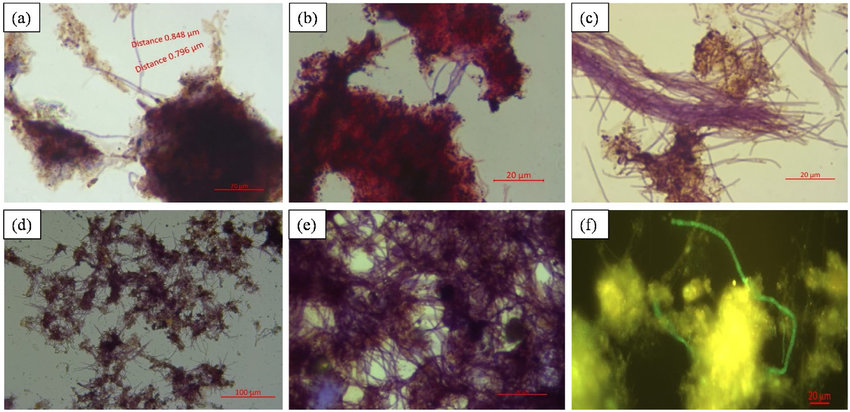
Microscopic view of activated sludge floc and filamentous bacteria

Technical Note: Morphology

The Settleomatic™ Analyzer assesses the physical floc structure that dictates terminal settling velocity.

Healthy Floc (Ideal Settling)

Dense, spherical clusters with a balanced filamentous backbone. Results in high Rate (uK) and low Compaction (C).

Filamentous Bulking

Excessive filament growth creates inter-floc bridging, resisting compression. AI detects this via curve linearization.

Microbe Group Role in Treatment Key Genera Indicator
Heterotrophic Bacteria Decompose organic matter (BOD/COD removal) Pseudomonas, Flavobacterium, Bacillus Form flocs; reduce suspended solids
Nitrifying Bacteria Convert ammonia → nitrite → nitrate Nitrosomonas, Nitrospira, Nitrobacter Require oxygen; slow-growing; sensitive to toxins
Denitrifying Bacteria Reduce nitrate/nitrite → N₂ gas Paracoccus, Pseudomonas stutzeri, Thauera Work in anoxic floc interiors
PAOs Remove excess phosphorus Candidatus Accumulibacter phosphatis Aerobic/anoxic cycling improves performance
Filamentous Bacteria Provide floc backbone Sphaerotilus natans, Microthrix parvicella Balance is critical — excess causes bulking
Protozoa Predators of free-floating bacteria Vorticella, Epistylis, Amoebae Ciliates indicate healthy, mature sludge
Metazoa Higher grazers, polishing effluent Rotifers, nematodes, tardigrades Long sludge age and stable operation

Built by engineers, for engineers

ONK Technologies Inc. is dedicated to transforming wastewater treatment through intelligent automation. Our focus is on the secondary process — the activated sludge system — where 70% of a plant's energy is consumed and where biological process control makes the greatest impact.

We combine decades of domain expertise in embedded systems, machine learning, and wastewater process engineering to deliver real-time intelligence to an industry that has long relied on manual methods.

Our team is currently conducting active pilot deployment at metropolitan treatment facilities, collecting live operational telemetries and validating our predictive models in preparation for our showcase at WEFTEC-2026.

ONK Technologies Inc.

Intelligent wastewater automation — hardware, software, and AI services for municipal and industrial treatment operations.

Xilicom Research Inc.

Research and development partner specializing in embedded systems, ML/AI algorithms, and real-time SCADA signal processing for industrial applications.

Silla Enterprise Inc.

Manufacturing and development partner specializing in industrial systems, enviromental scrubbers, and process controls for industrial complexes.

Ready to modernize your plant?

See how the Settleomatic platform can bring continuous intelligent monitoring to your facility.

Send us a message

Get in touch

Headquarters

ONK Technologies Inc.
Silicon Valley, California, USA

Research Partner

Xilicom Research Inc.

Response Time

We typically respond within 1 business day.